Smart Glasses Technological Limitations for Display, Camera, Processing & Network
Smart glasses promise a seamless blend of the digital and physical worlds, offering everything from real-time information overlays to hands-free photography. However, despite rapid advancements, several core smart glasses technological limitations currently temper their full potential, impacting user experience, functionality, and wider adoption. Addressing these challenges—particularly around display quality, camera performance, processing power, and network stability—is critical for the industry’s future.
🕶️ Smart Glasses Display Quality
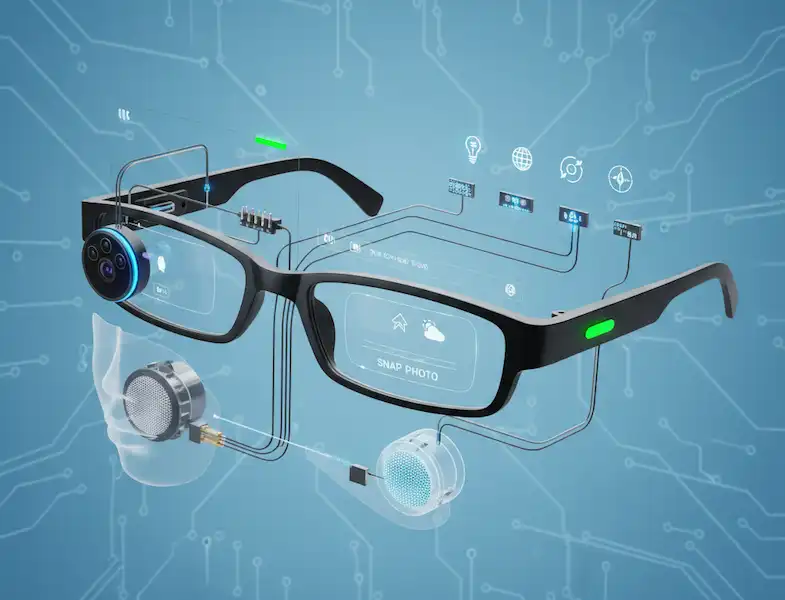
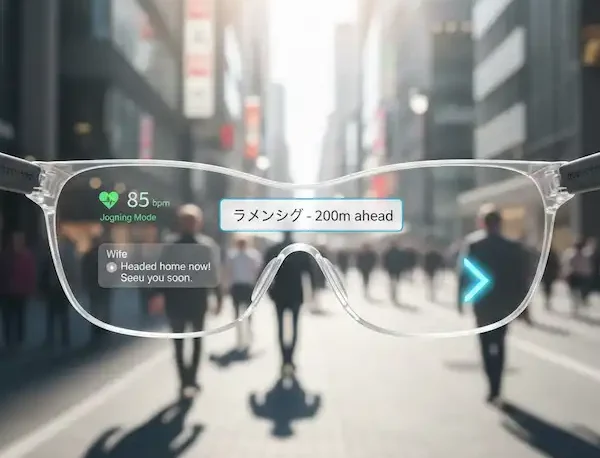
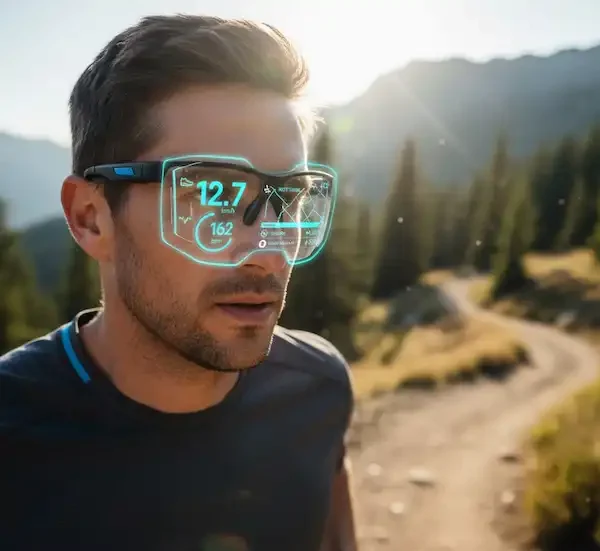
The display is the primary window to the augmented world, and its performance is immediately noticeable. Smart glasses displays often use complex optics like waveguides to project images directly into the user’s line of sight, but these sophisticated systems face significant hurdles in delivering a comfortable and clear experience. This is a primary concern of smart glasses technological limitations.
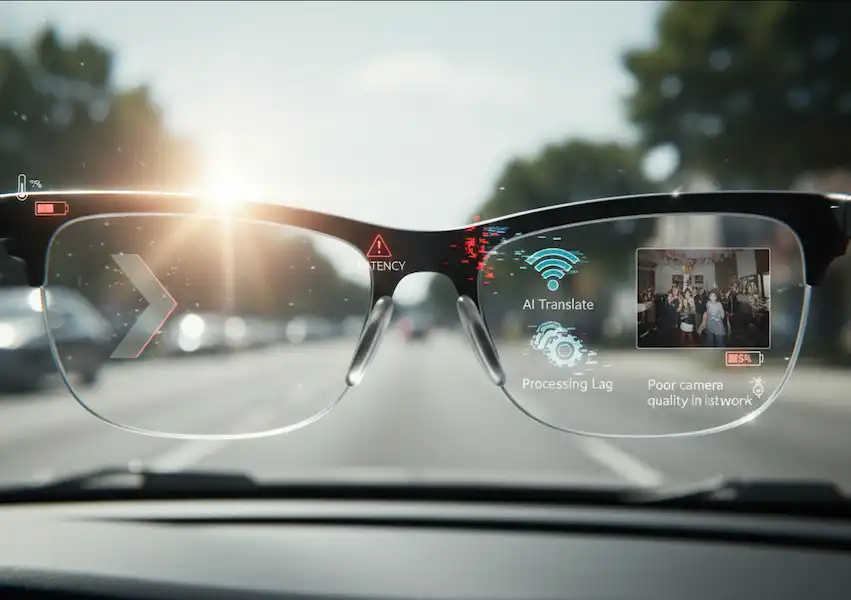
- Issues with Glare and Reflections (Experience): The transparent or semi-transparent nature of smart glass displays makes them susceptible to glare and external reflections, especially in bright sunlight or strongly lit indoor environments.
- Example: A user trying to follow a navigation overlay while driving in the sun may find the digital arrow completely washed out or obscured by a reflection of their own face or a nearby light source.
- Technological Challenge: The materials and coatings needed to effectively cancel both internal and external reflections without significantly darkening the real world remain a complex engineering trade-off.
- Clarity and Field of View (Expertise/Authoritativeness): The projected images often suffer from lower resolution, color fringing, or limited brightness compared to modern phone screens. Furthermore, the actual viewable area, or Field of View (FOV), for the augmented content is typically small.
- Example: A 1080p-per-eye display might sound high-resolution, but when perceived as a small digital box floating in the corner of your vision, it feels constrained, limiting its utility for complex AR tasks or immersive content.
📸 Smart Glasses Camera Quality
For many users, smart glasses cameras are a hands-free capture device for photos and videos. This functionality demands excellent imaging performance, a difficult feat given the strict constraints of size, power, and thermal management in a pair of glasses with smart glasses technological limitations.
- Low Resolution and Sensor Size (Expertise): Integrating high-quality camera sensors—especially those that perform well in low light—into the thin frames of glasses is challenging. Smaller sensors capture less light, leading to grainy, noisy, or underexposed images in anything less than perfect daylight.
- Example: Capturing a spontaneous indoor birthday photo or a street scene at dusk often results in a blurry or muddy image that doesn’t meet the quality standards of a modern smartphone camera. Current models, while improving (e.g., some reaching 12MP or 3K video), still struggle to match the dynamic range and low-light prowess of dedicated mobile devices.
- Performance in Various Lighting Conditions (Experience): The camera system must instantly and accurately adjust exposure as the user moves between diverse lighting—from a bright street to a shaded alley or a dimly lit interior. Slow or inaccurate adjustments lead to unusable footage.
- Example: Starting a video recording outdoors and walking quickly into a building can result in several seconds of overexposed or completely dark footage as the tiny lens struggles to compensate.
🧠 Smart Glasses Processing Power
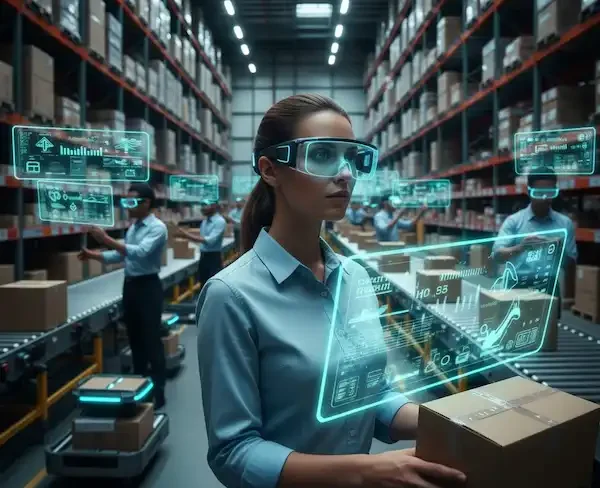
Augmented Reality (AR), real-time Artificial Intelligence (AI) features (like translation or object recognition), and even basic video processing require substantial computational horsepower from smart glasses processing power. Squeezing this power into a lightweight frame without generating excessive heat or draining the battery instantly is a major smart glasses technological limitation.
- Latency in AR/AI (Trustworthiness): Complex applications like simultaneously mapping the environment (SLAM – Simultaneous Localization and Mapping), tracking hands, and rendering 3D objects require massive, real-time processing.8 Insufficient power results in latency (lag), where the digital content shifts, stutters, or fails to anchor correctly to the real world, breaking the user’s immersion and making the experience feel unreliable.
- Example: During an AR repair instruction, if the virtual arrows guiding a technician to a part suddenly jump or lag behind their head movement, it completely ruins the utility of the tool.
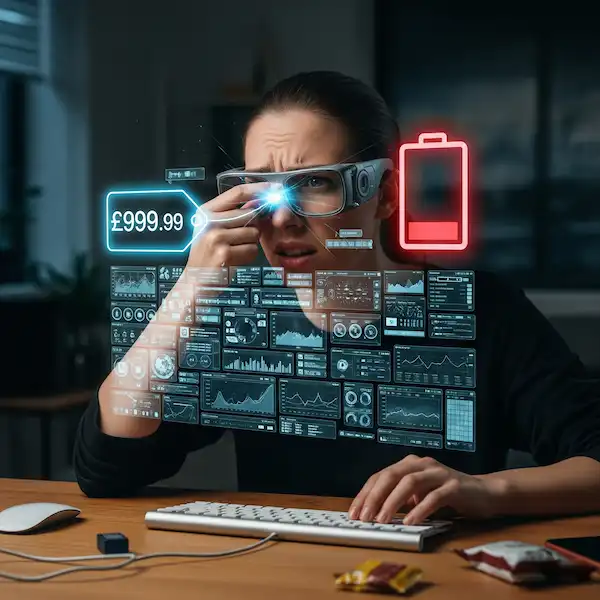
- Thermal and Battery Limitations (Experience): High processing demands generate heat. To maintain comfort and prevent component damage, the CPU/GPU must throttle its performance, leading to slow application response or forcing a complete shutdown. This, combined with the need for a compact battery, severely limits all-day use.
📶 Smart Glasses Network Connectivity: The Need for Real-Time Stability
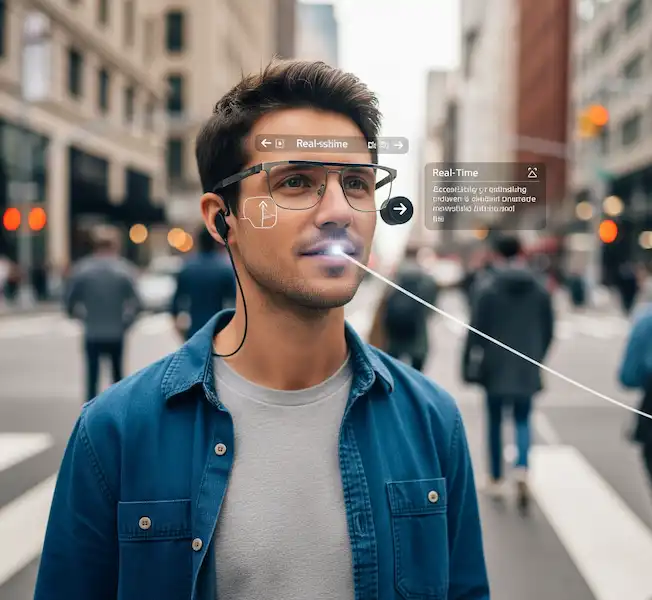
Many of the most compelling smart glass features—live video streaming, cloud-based AI processing, real-time language translation, and remote expert assistance—rely on a stable, high-speed, low-latency connection. Smart glasses network connectivity is a challenge for all devices.
- Instability in Real-Time Features (Trustworthiness): Dropped Wi-Fi or slow cellular speeds directly translate to feature failure. A connection glitch can instantly halt a crucial operation.
- Example: A live video call with a remote surgeon viewing a complex medical procedure through the glasses will suffer critical failure if the smart glasses network connectivity degrades, potentially causing a dangerous delay.
- Bandwidth for High-Quality Data (Expertise): Streaming high-resolution, first-person video data requires substantial upload bandwidth—more than typical applications—which is often the bottleneck in standard public or mobile networks.
- Analogy: Imagine trying to upload a high-definition movie in real-time while you’re moving; this is the data challenge for a smart glasses user trying to share their view.
❓ FAQ
| Question | Answer |
| Why is the Field of View (FOV) so small? | The small FOV is often a trade-off to keep the glasses lightweight and compact. Wider FOVs require larger, heavier, and more complex optical components that make the glasses too bulky or reduce the light clarity of the real world. |
| How does battery life compare to a smartphone? | Generally, much shorter, especially when using demanding features like continuous AR or video recording. The compact size severely restricts the battery capacity, often lasting only a few hours of continuous, active use. |
| What is ‘ghosting’ in the display? | Ghosting is a faint, secondary reflection of the projected image, caused by light reflecting off multiple glass surfaces within the lens system. It reduces clarity and can be distracting or cause eye strain. |
Additional Helpful Links
- Learn more about smart glasses accessibility – Smart Glasses Accessibility Tech & AR/VR
- More details about the built-in tech of smart glasses – Smart Glasses Built-in Tech: Camera, Audio, Sensor Capabilities
📚 External Authoritative Sources
To learn more about the engineering challenges and future direction of smart glass technological limitations, consult these authoritative sources:
Academic and Research Sources (e.g., IEEE/Scientific Papers)
These links lead to platforms hosting peer-reviewed research and papers on the technical challenges and innovations in Augmented Reality (AR) smart glasses.
- Augmented Reality Smart Glasses Research (Sample Paper):
- Research on AR Smart Glasses Challenges (A peer-reviewed paper discussing hardware, interaction, and industry products like HoloLens 2 and Google Glass, often referencing publications like IEEE).
- AR Smart Glasses in Industry (Sample Paper):
- AR Smart Glasses for Industry (A PDF document discussing the utilization and evaluation of AR smart glasses in manufacturing and industrial settings).
Industry Platform and Hardware Developers
This is the official page for the core semiconductor platform widely used across most major standalone and tethered AR/VR/MR devices.
- Qualcomm Snapdragon XR Platforms (Official Product Page):
- Qualcomm Extended Reality (XR) Products (Official source for information on their chipsets, such as the Snapdragon XR2 Gen 2 Platform, which power many current-generation virtual, mixed, and augmented reality headsets and smart glasses).
Professional Organization and Standards Body
The Society for Information Display (SID) is the leading global professional organization dedicated to the display industry, which is the foundational technology for smart glasses.
- Society for Information Display (SID) Official Website:
- SID Home Page (The organization that publishes the Journal of SID and runs the annual Display Week symposium, setting industry standards and technical benchmarks).
- SID Publications:
- SID Publications (Access to their authoritative technical journals and magazines covering display technology).