😎 My Honest Take on Smart Glasses for Athletes
Let’s be real: we athletes are data obsessed. Whether you’re chasing a KoM on Strava or meticulously tracking your Training Load on Garmin, you’re constantly looking down at a screen—your watch, your bike computer, your phone. It’s distracting, and honestly, a little dangerous when you’re hurtling down a hill!
That’s where Smart Glasses for Athletes come in. Forget the goofy Google Glass days; the new generation of athletic smart glasses is a game-changer. I’ve been testing them out, and it feels like stepping into a sci-fi movie where your stats are just there, floating in front of your eye, without blocking your view.
What Even Are These Things? (A Quick Chat)
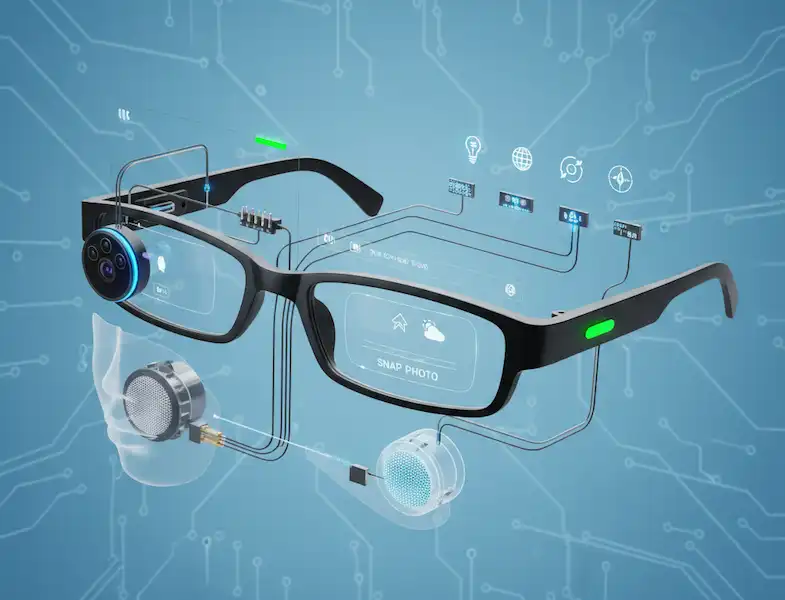
Basically, Smart Glasses for Athletes are high-tech sunglasses with a tiny screen built into the lens or frame. They act as a heads-up display (HUD), much like the ones fighter pilots use.
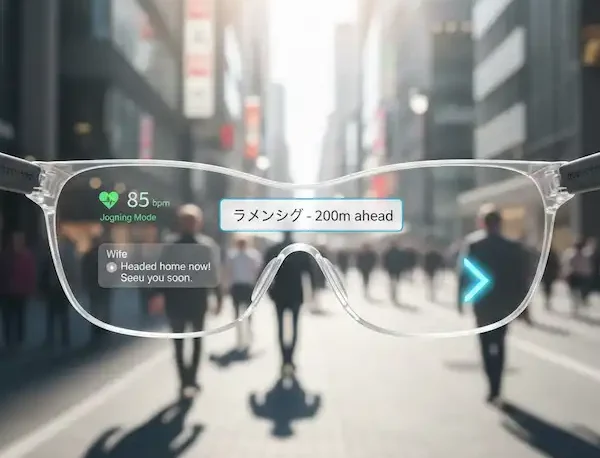
Think about the last time you were crushing a run or ride. You glance down: Speed? Heart rate? Turn coming up? With smart glasses, that info is projected onto the lens, so you keep your head up, your eyes on the road, and your flow uninterrupted.
My Personal Vibe Check: The first time I saw my heart rate floating above the handlebars, I almost laughed. It felt futuristic, but after ten minutes, it just felt normal. It dramatically reduced the need for that dangerous “head dip” on the bike.
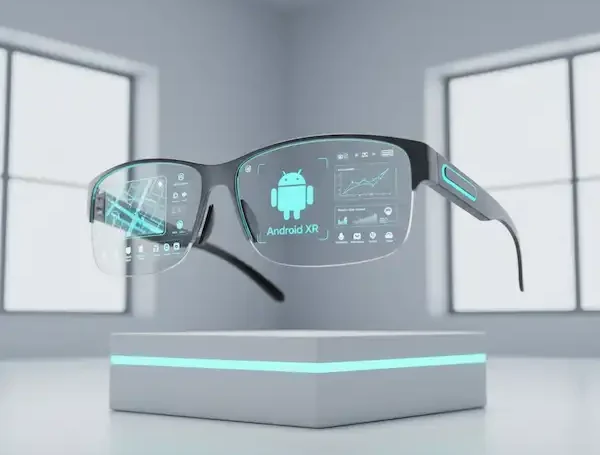
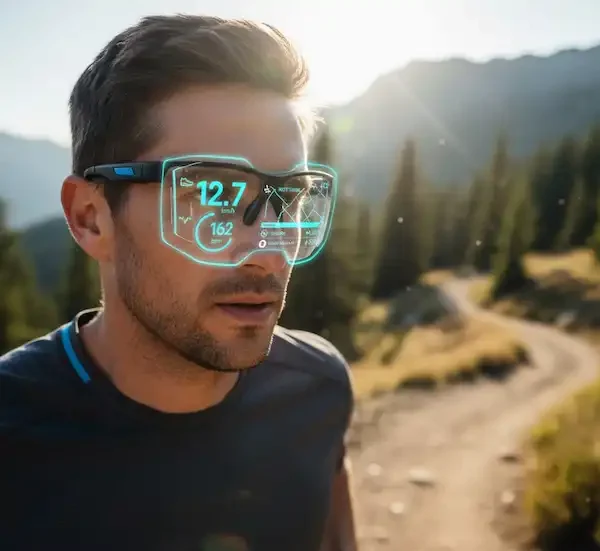
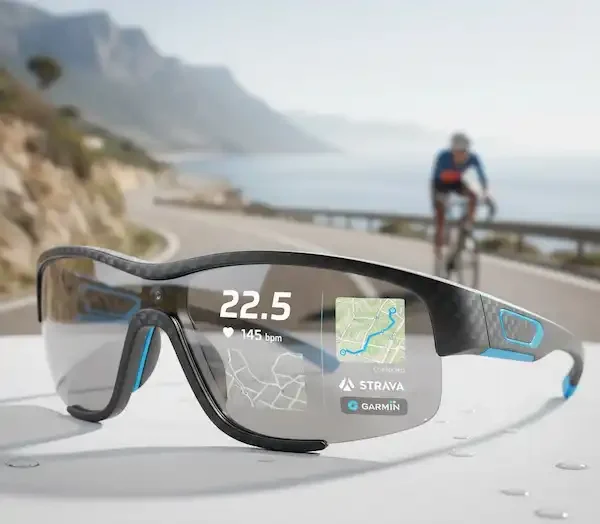
Here’s a look at what some smart glasses might look like.
Why Smart Glasses for Athletes?
Traditional bike computers and smartwatches are excellent, but Smart Glasses for Athletes offer unique advantages, especially when integrated with platforms like Strava and Garmin.
Benefits for Athletes:
- Hands-Free Data: View crucial metrics like speed, distance, heart rate, power, and navigation without taking your eyes off the road or trail.
- Enhanced Safety: No more fumbling with devices or looking down, allowing you to stay focused on your surroundings.
- Real-Time Feedback: Get instant updates on your performance, helping you maintain pace, hit targets, or react to changing conditions.
- Immersive Experience: Navigate complex routes with turn-by-turn directions overlaid directly onto your view.
- Motivation: See live segment data from Strava, pushing you to beat your PRs or challenge friends.
The Real Deal: Strava & Garmin Integration
This is the make-or-break feature for most of us. Who wants to buy new gear that doesn’t talk to the ecosystem they’ve spent years building? Luckily, the tech has caught up.
🚀 Strava: Segment Hunter Mode
If you live for the “Segment Started” alert, this is heaven.
Picture this: You roll up to the base of your favorite climb. Instead of fumbling with your phone or waiting for your Wahoo/Garmin to load the segment, the Smart Glasses for Athletes automatically know.
- Live Updates: You see your current speed and power next to your PR time, your rival’s time, or the KoM. It’s a constant, gentle—or not-so-gentle—nudge to push harder.
- Navigation: Following a Strava route? The turn arrows appear right on the road ahead of you. No more missing the key turn because your bike computer was hiding under your arm!
Anecdote: Last week, I was doing a local 5K run and saw my predicted finish time dropping as I saw my pace overlay. It gave me the perfect motivation spike to empty the tank in the last kilometer. It was awesome.
🛡️ Garmin: Amplifying Your Ecosystem
Garmin users, you know the drill: your whole world lives in Connect and flows through your watch or Edge computer. Smart Glasses for Athletes often integrate seamlessly with this ecosystem.
- Data Mirroring: My smart glasses basically became a secondary display for my Garmin Fenix. All the metrics I had set up—from heart rate zones to cadence—were instantly available in my peripheral vision.
- Structured Workouts: Doing intervals? The glasses flash the instructions: “WORK: Z4 Power” or “RECOVER: Spin Easy.” You don’t have to break rhythm to look at your wrist.
- Varia Safety: This is huge! If you use the Garmin Varia radar (the one that warns you of cars behind you), the car icons appear right on the edge of the glasses’ display. It’s an invaluable safety feature, keeping your focus forward while staying aware of traffic approaching from behind.
My Top Criteria: Picking the Right Pair
So, you’re ready to dive in? Here’s what I recommend looking for in Smart Glasses for Athletes, based on my own experience:
| Feature | Why It Matters (The “Athlete” Reason) |
| Display Clarity | It has to be bright enough to see in midday sun. If you can’t read it easily while squinting, it’s useless. |
| Fit & Comfort | They need to stay put when you’re sweaty, bumpy, or running fast. Look for adjustable nosepieces and secure arms. |
| Battery Life | Can they survive your Saturday long ride or long run? For endurance athletes, 6+ hours should be the minimum target. |
| Integration | Don’t just ask if it connects to Strava—ask how well it connects to your specific Garmin device (e.g., does it use the Connect IQ store?). |
| Lenses | Make sure they offer changeable or photochromic (light-adjusting) lenses. You need the right tint for dawn, noon, and dusk. |
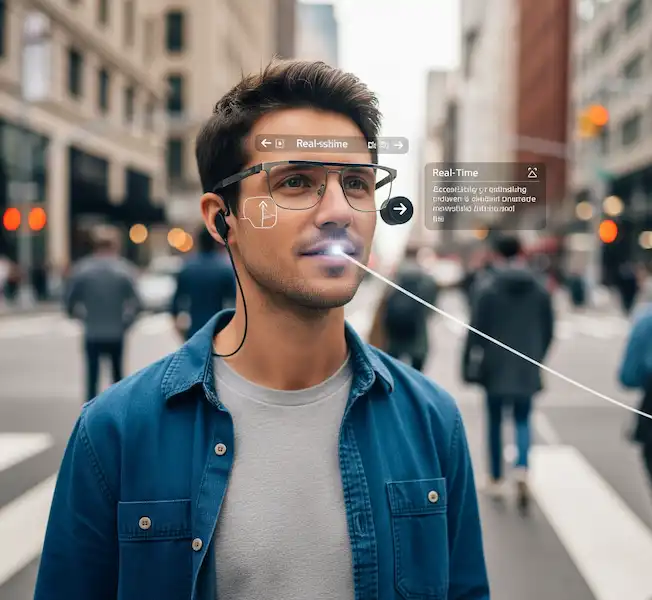
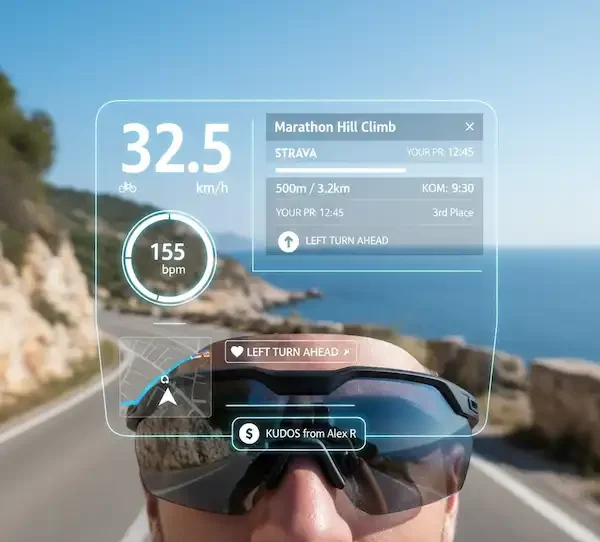
Here’s an example of data displayed directly in the athlete’s line of sight.
How Smart Glasses Integrate with Strava/Garmin
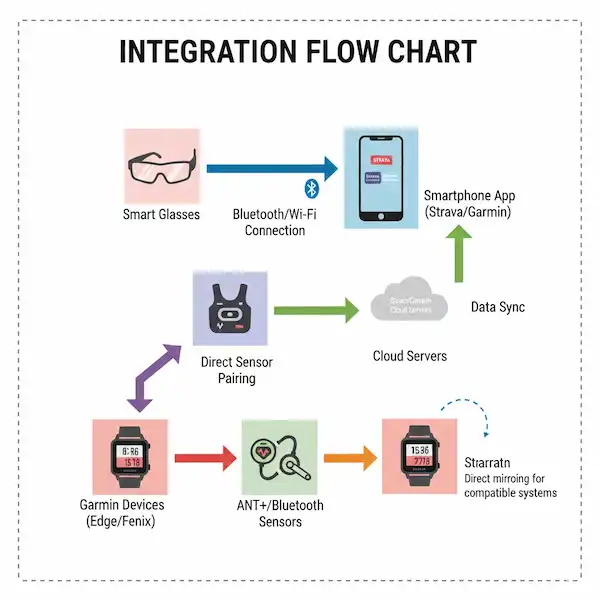
The integration typically works in one of several ways:
- Direct App Integration: The smart glasses run a dedicated app that directly connects to your Strava or Garmin Connect account via Wi-Fi or Bluetooth from a paired smartphone.
- Bluetooth Bridging: The smart glasses connect via Bluetooth to a paired smartphone running the Strava or Garmin Connect app. The phone then pushes data to the glasses.
- ANT+/Bluetooth Sensor Hub: Some advanced smart glasses may have built-in ANT+ or Bluetooth sensors, allowing them to directly pair with external devices like heart rate monitors, power meters, and speed/cadence sensors, with data then pushed to Strava/Garmin via a companion app.
- Garmin Ecosystem Integration: For Garmin-branded or Garmin-compatible displays, the integration is often seamless, mirroring data directly from your Garmin device (e.g., Edge computer, Fenix watch).
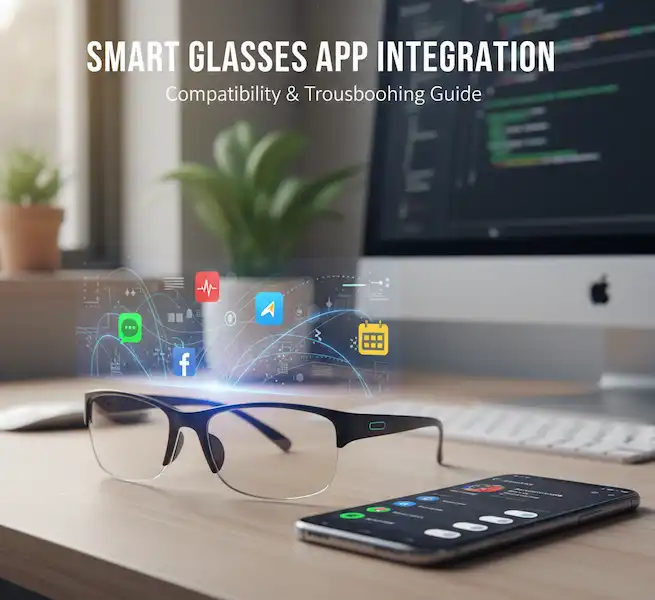
Integration Flow Chart:
The Future is Clear (Literally)
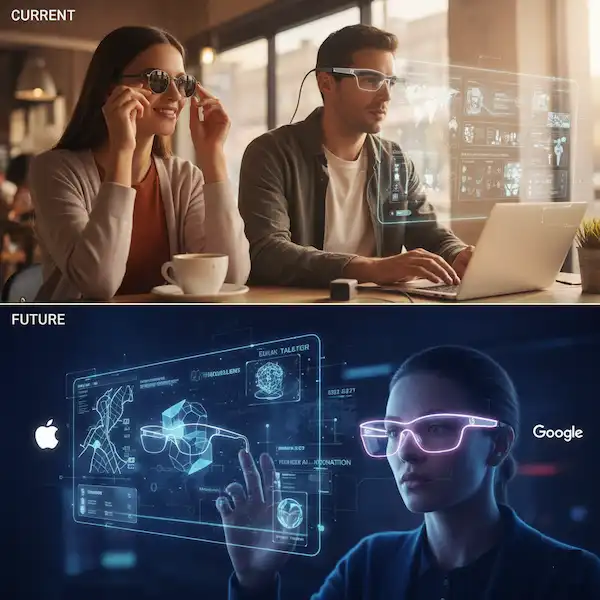
Honestly, the biggest hurdle for Smart Glasses for Athletes today is often the price and the look. But the technology is improving rapidly.
I see a future where these glasses are standard equipment, replacing clunky bike mounts. Imagine seeing augmented reality lines on the road telling you the optimal racing line on a descent, or a virtual running buddy pacing you in real-time.
It’s not just about tracking data; it’s about making data visible without sacrificing focus, effort, or safety.
My Verdict: If you’re a serious athlete deeply invested in the Garmin/Strava ecosystem and value keeping your head up and hands free, smart glasses are absolutely worth exploring. They might not be cheap, but the safety and performance benefits are undeniable.
FAQ:
Q: Are they distracting? A: At first, yes. Your brain has to adjust to the overlay. But the data is usually projected near the edge of your vision. After a couple of rides, it becomes passive—you only focus on the display when you need the data, just like glancing at your dashboard in a car.
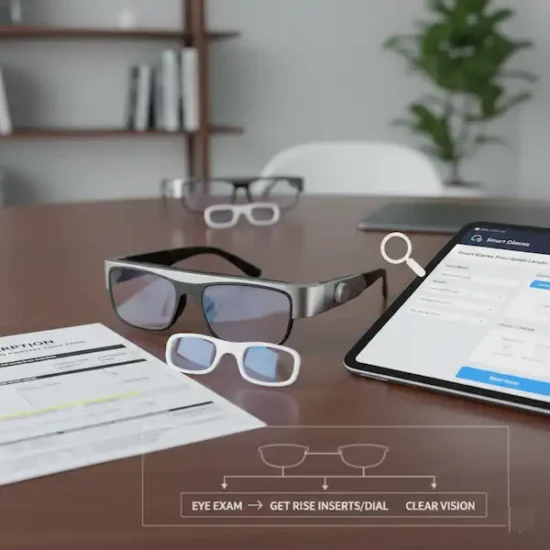
Q: Can I wear them over my regular glasses? A: Some models offer prescription inserts that clip in, which is the best option. Others are large enough to fit over small prescription frames, but this can affect comfort. Always check the specs!
Q: What about battery life on a long event, like an Ironman? A: You need to be very selective here. For true ultra-endurance, you might need an external battery pack connected to the glasses (if the model allows). Currently, this is one of the main limitations for the most demanding athletes.
Additional Helpful Links
- Here are instructions on how to install apps for smart glasses – Smart Glasses Apps: How to Install and Use Apps
Authoritative External Links:
- Garmin Official Website: https://www.garmin.com/ (For information on Garmin devices and ecosystem)
- Strava Official Website: https://www.strava.com/ (For information on fitness tracking and segments)
- IEEE Spectrum – Augmented Reality: https://spectrum.ieee.org/augmented-reality (For general insights into AR technology)
- The Verge – Wearables: https://www.theverge.com/wearable-tech (For reviews and news on wearable technology, including smart glasses)