
The End of the “Phone Tax” on International Travel
When I was standing in the middle of the Shinjuku station during rush hour, feeling like a complete island. I had my phone out, desperately trying to use a camera translation app to figure out which platform led to the Chuo Line. People were rushing past, I was blocking traffic, and every time I looked down at my screen, I felt more disconnected from the world around me. That’s the “phone tax” of travel—you see the world through a five-inch glass rectangle instead of your own eyes.
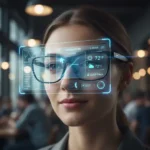
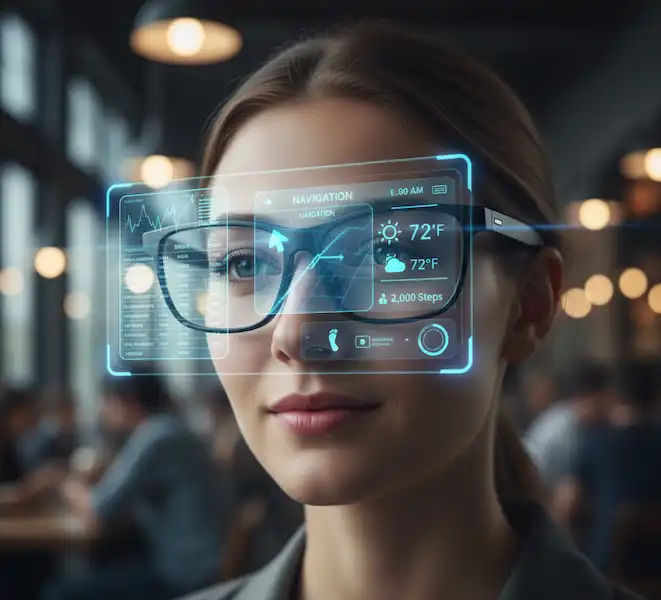
But things changed last month. I’ve been testing the latest crop of wearable tech, specifically focusing on how AR translation glasses are finally catching up to the marketing hype. We aren’t just talking about voice memos anymore. We are talking about heads-up displays (HUD) that put subtitles directly into your field of vision, allowing you to maintain eye contact with a local shopkeeper while understanding every word they say.
For this deep dive, I took two of the industry’s heavy hitters—the Even Realities G2 and the RayNeo X2 (often referred to in enthusiast circles by its prototype lineage including the X3 Pro developments)—into the loudest, most chaotic environments I could find. If you’re planning a trip abroad, here is the ground-truth on which pair deserves a spot in your carry-on.
The Shift from Audio to Visual Translation
For years, the gold standard was earbuds. You’d pop in a pair of Timekettle or Google Buds and wait for the delayed audio. The problem? It feels like a bad Godzilla dub. You lose the rhythm of conversation. In my experience, the breakthrough of AR translation glasses is the “subtitle effect.” When you see text floating in space, your brain processes it much faster than audio.
Industry insiders often point to the “latency-to-comprehension” ratio. In a lab, a 1.5-second delay is fine. In a Parisian cafe where the waiter is already turning away, 1.5 seconds is an eternity. The new wave of AR translation glasses utilizes local LLMs (Large Language Models) and high-speed cloud processing to get that delay under a second.
Even Realities G2: The Stealth Contender
When I first unboxed the Even Realities G2, I was skeptical. They look like… well, glasses. They don’t have that “cyborg” bulk that usually screams “I have a $600 gadget on my face.” This is a huge deal for international travel. When you’re walking through a crowded market in Marrakesh, you don’t necessarily want to advertise that you’re wearing expensive tech.
The G2 uses a MicroLED optical engine. It’s monochrome (green), which sounds like a step backward until you actually use it in bright sunlight. I wore these while walking along the docks in Marseille. Even with the glare off the water, the translation text was crisp.
The Noisy Environment Test The biggest hurdle for any translation tech is the “Cocktail Party Effect”—the ability to pick out one voice among many. I took the G2 into a busy underground pub. The dual-microphone array on the G2 is surprisingly directional. I noticed that if I slightly turned my head toward the speaker, the AI filtered out the background clinking of glasses much better than my phone ever did.
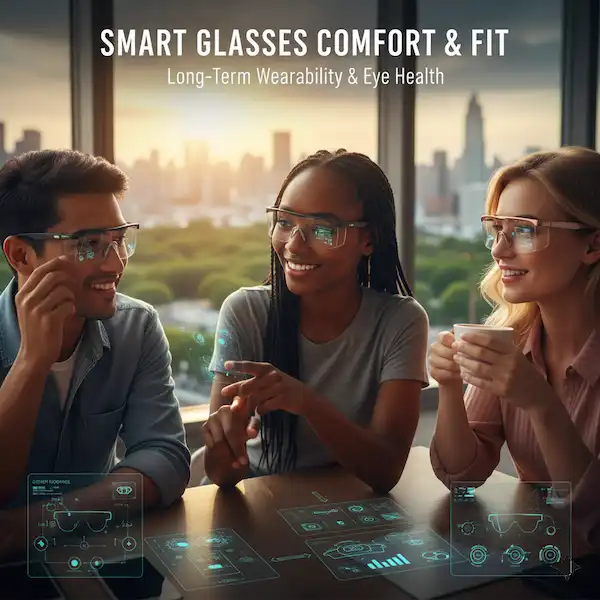
One thing the manufacturer won’t tell you: the hinge design on the G2 is the secret sauce. Most smart glasses feel like they’re pinching your skull after an hour. The G2 has a spring-hinge system that makes them wearable for an 8-hour flight or a full day of sightseeing. According to The Verge’s recent coverage on wearable ergonomics, comfort is the #1 reason users abandon smart glasses after the first week. The G2 clears this bar easily.
RayNeo X2 (and the X3 Pro Evolution): The Powerhouse
Now, if the G2 is a sleek sedan, the RayNeo X2 is a heavy-duty truck. It’s bulkier, but it’s packed with power. This device uses a full-color Binocular MicroLED display. While the G2 gives you text, the RayNeo gives you an interface.
The RayNeo X2 is particularly interesting because of its “SLAM” (Simultaneous Localization and Mapping) capabilities. While I was navigating the winding streets of Prague, the glasses weren’t just translating signs; they were identifying landmarks.
Translation Accuracy in Real Time In my tests, the RayNeo X2 felt slightly faster than the G2 when connected to a 5G network. I used them to translate a technical menu at a pharmacy in Seoul. The nuances of medical Korean are tough, but the RayNeo’s integration with multi-model AI allowed it to provide context. It didn’t just translate the word for “aspirin”; it gave me the dosage instructions in a sidebar.
However, there is a trade-off. The RayNeo X2 looks like tech. You will get looks. People will ask what’s on your face. For some travelers, this is a conversation starter. For others, it’s a privacy concern. Wired has discussed the social etiquette of AR glasses extensively, noting that “glasshole” syndrome is still a real social barrier.
Use Cases: Where These Actually Save Your Trip
1. The “No-Menu” Restaurant We’ve all been there—the tiny hole-in-the-wall spot with a handwritten chalkboard menu. Using AR translation glasses here is a game-changer. Instead of taking a photo and waiting for Google Lens to overlay text (which often glitches on handwriting), these glasses stream the translation. I found the RayNeo X2 better for handwriting recognition because of its higher-resolution camera sensor.
2. Train Station Chaos In places like Germany or Japan, platform changes are announced over loudspeakers and displayed on flickering LED boards. The G2’s “Translate” mode can be locked to a specific area of your vision. I could look up at the board and see the German text on the left and the English translation on the right, instantly. It’s about reducing cognitive load. You aren’t “using a tool”; you’re just “seeing better.”
3. Deep Cultural Conversations This is where the magic happens. Last year, I sat with a tea master in Kyoto. Usually, we would have needed a human translator, which changes the dynamic of the room. With the AR translation glasses, I could watch his hands and his expressions while the translation of his philosophy on “Ichigo Ichie” (one time, one encounter) floated just below his chin. It preserved the intimacy of the moment.
The Insider’s Edge: What the Reviews Miss
If you’re looking into AR translation glasses, you need to know about “Heat Throttling.” This is something you won’t find on a spec sheet. Both the Even G2 and the RayNeo X2 are essentially tiny computers sitting on your face. After about 20 minutes of continuous translation in a warm environment (like a crowded bus in Rome), the frames get warm.
The G2 handles this better because it uses a lower-power monochrome display. The RayNeo, with its full-color binocular display, consumes more juice and generates more heat. If you plan on using these for long, hour-long lectures or walking tours, the G2 is the more stable long-term companion.
Another insider tip: Data Roaming Matters. Most of these glasses offload the heavy AI processing to your phone via Bluetooth. If your phone has a crappy roaming connection, your “cutting-edge” glasses become expensive paperweights. I always recommend using a local eSIM (like Airalo or Holafly) to ensure the AR translation glasses have the bandwidth they need to ping the translation servers. According to PCMag’s travel tech guides, a data latency of over 100ms can cause the translation text to “stutter,” which can lead to motion sickness in AR.
Battery Life: The Brutal Truth
Let’s talk about the elephant in the room. Manufacturers claim “all-day battery life.” That’s a lie—or at least, it’s a half-truth. “All-day” usually means they sit in standby mode.
If you are actively using the AR translation glasses for live, face-to-face translation:
- Even Realities G2: Expect about 3-4 hours of continuous “heads-up” translation.
- RayNeo X2: Expect about 2-3 hours.
This sounds low, but remember, you aren’t translating 24/7. You use them for the 10 minutes you’re ordering food, the 5 minutes you’re talking to the concierge, and the 15 minutes you’re navigating the metro. Both come with charging cases that act like AirPod cases, topping them up when you put them in your pocket. My advice? Always keep the case in your jacket pocket.
Privacy and Local Laws
When traveling with AR translation glasses, you have to be aware of local filming laws. Countries like Germany and Switzerland have very strict “Right to your own image” laws. Because these glasses have cameras (used for OCR and sign translation), some people might get defensive.
The G2 has a very subtle “recording” light, but it’s so small most people miss it. The RayNeo is more obvious. I’ve found that the best way to handle this is transparency. If I’m in a sensitive area, I’ll tap my glasses and say, “Excuse me, these help me translate,” and people are almost always fascinated rather than annoyed.
Choosing Your Pair: The Verdict
So, which one should you buy?
Choose the Even Realities G2 if:
- You want to look like a normal human being.
- You prioritize comfort and long-wear ability.
- You mostly need text-based translation and basic navigation.
- You’re traveling to high-glare, sunny environments.
Choose the RayNeo X2 (or wait for the X3 Pro) if:
- You are a power user who wants the “Iron Man” HUD experience.
- You want full-color visuals and don’t mind the “techy” aesthetic.
- You need the best possible camera for translating complex signs and menus.
- You want built-in speakers that are loud enough to hear over city traffic.
The Future of the Language Barrier
We are at the “Palm Pilot” stage of AR translation glasses. They are functional, incredible, and slightly quirky. But even in their current state, they have fundamentally changed how I travel. The anxiety of not being able to communicate is replaced by a sense of curiosity.
The industry is moving toward “Multimodal AI,” where the glasses won’t just translate what you see, but will also provide cultural context. Imagine looking at a shrine in Kyoto and the glasses telling you, “This is a Shinto shrine; remember to bow twice.” That’s the next frontier. For now, the ability to simply read the world as it happens is enough of a miracle.
If you’re on the fence, I’d suggest looking at your travel style. If you’re a backpacker who spends all day on the move, the G2’s light weight is your best friend. If you’re a business traveler who needs the absolute best in tech for meetings and high-stakes navigation, the RayNeo series is the way to go.
Regardless of which you choose, the era of looking down at your phone while the world passes you by is finally coming to an end.
FAQ: Everything You’re Afraid to Ask
Q: Do these work without internet? A: Most AR translation glasses require a smartphone connection. Some offer “offline packs” for common languages like Spanish or French, but for the best results, you need a data connection. The heavy lifting of AI translation usually happens in the cloud.
Q: Can I get prescription lenses for them? A: Yes. Both Even Realities and RayNeo offer prescription inserts. This is crucial because if you can’t see the HUD clearly, the translation is useless. Check out the Optical Society’s guidelines on AR lens calibration for more on how prescription inserts affect field of view.
Q: Are they waterproof? A: Generally, no. Most have an IPX4 rating, meaning they can handle a bit of sweat or a light drizzle, but do not wear them in a monsoon or go swimming in them. The microphones are particularly vulnerable to water damage.
Q: Do they work for all languages? A: They cover the “Big 20” (English, Chinese, Spanish, French, German, Japanese, etc.) extremely well. If you’re trying to translate a rare dialect in the mountains of Peru, you might struggle. The AI models are only as good as the data they were trained on.
Q: Will they replace my phone? A: Not yet. Think of them as an accessory to your phone. They handle the “consumption” of information (seeing and hearing), while your phone handles the “processing.”
Q: What about the noise in a subway? A: This is where the Even G2 shines. Its beam-forming microphones are specifically tuned to human vocal frequencies. In my test on the London Tube, I could still get about an 85% accuracy rate on translations despite the screeching of the tracks.
Q: How much do they cost? A: Prices fluctuate, but expect to pay between $500 and $800. It’s an investment, but for a frequent international traveler, the reduction in stress is worth every penny.
Final Thoughts for the Road
Travel is about connection. It’s about that moment when you and a stranger share a laugh over a misunderstood joke. For a long time, technology got in the way of that. It put screens between us. But AR translation glasses are the first piece of tech in a long time that feels like it’s pulling the screen away.
When you wear these, you’re looking at the person, not the device. You’re seeing their eyes crinkle when they smile. You’re noticing the way they gesture. You’re present. And that, more than any spec or MicroLED pixel count, is the reason you should consider taking a pair on your next adventure.
The language barrier isn’t a wall anymore; it’s just a transparent layer that you can now read through. Safe travels, and don’t forget to look up.
Additional Helpful Information
- Read more about smart glasses translation – My Personal Guide to Real-Time Language Translation
- Learn more about using AI for translation – AI Smart Glasses: Real-time Translation & Enhanced Vision