
From Gadget to Essential: My Journey with Smart Glasses with Cameras
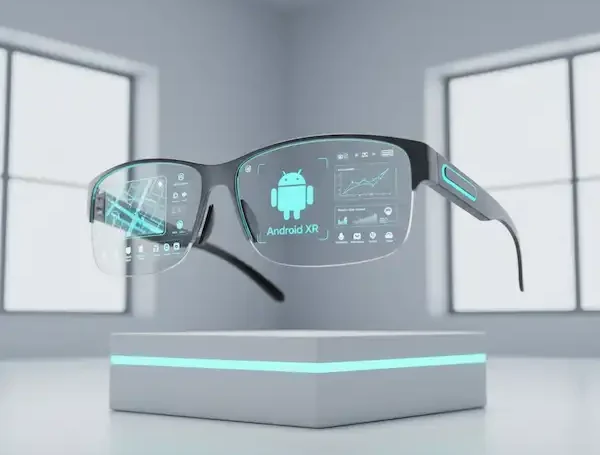
I still remember the look on my barista’s face back in 2023 when I walked into my local coffee shop wearing a pair of first-gen smart glasses. It wasn’t a look of “wow, cool tech,” but rather a nervous glance at the tiny lens nestled in the frame. Back then, smart glasses with cameras felt like a social experiment gone wrong. But standing here in 2026, things have changed. I’m currently wearing a pair of the new Android XR frames that look almost identical to my old Clubmasters, and nobody has blinked twice.
If you’re looking into smart glasses with cameras today, you aren’t just buying a gadget; you’re buying a new way to document your life without a slab of glass and metal blocking your view. Whether you’re an iPhone devotee or an Android power user, the landscape has finally matured. Here is everything I’ve learned from living with these things—including the industry secrets the marketing glossies won’t tell you.
The Reality of Point-of-View Capturing
The biggest draw for any pair of smart glasses with cameras is the “POV” factor. I used to think my smartphone camera was enough until I tried to film my daughter’s first bike ride. Holding a phone meant I was watching her through a screen instead of with my own eyes. With smart glasses, I just tapped the temple, and I have a 3K stabilized video of her laughing that looks exactly like what I saw.
Sensor Tech: What’s Under the Hood?
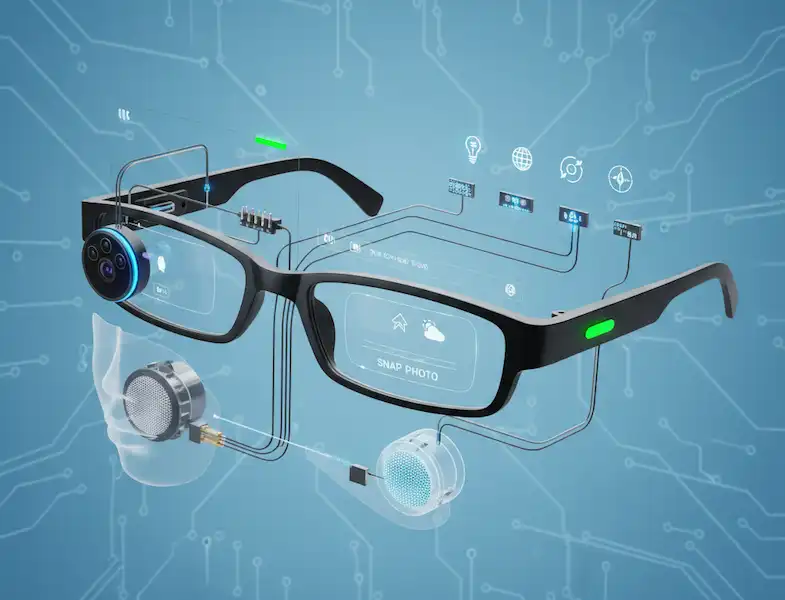
Most people assume these are just “webcams on your face,” but the engineering is much more localized. In 2026, we’ve moved past the grainy 720p footage of the early 2020s. Most top-tier frames now use 12MP to 16MP ultra-wide sensors. According to recent reviews of the best smart glasses with cameras on PCMag, the resolution has hit a sweet spot where digital stabilization can actually keep up with your head movements.
Inside the industry, we call this “foveated capture.” Because the glasses have limited battery and processing power, they don’t record the way a GoPro does. Instead, they use AI to prioritize the center of the frame—where your eyes are naturally focusing—to save on data. This is why the edges of your videos might look a bit softer if you really pixel-peep, but for a Reel or a TikTok, it’s flawless.
Android vs. iPhone: The Ecosystem War
This is where things get “sticky.” If you’re choosing a pair of smart glasses with cameras, your phone’s operating system is the biggest factor in your experience.
The iPhone Experience (iOS)
Apple has traditionally kept a tight leash on third-party hardware. If you’re using the Ray-Ban Meta series or the rumored 2026 Apple “Lite” frames, the integration is slick but fenced in.
- The Pro: The “Photos” app integration is seamless. Your glasses sync in the background, and suddenly your POV shots are sitting right next to your selfies.
- The Con: Background syncing can be a battery hog. iOS is aggressive about killing background tasks to save phone battery, which sometimes means you’ll open your app only to find your videos haven’t transferred yet.
The Android Experience (Android XR)
With the launch of the Android XR platform this year, Google has turned the tables. Working with partners like Samsung and XREAL, Android smart glasses with cameras now feel like a true extension of the OS.
- The Pro: Deep integration with Google Photos and Gemini. I can look at a monument, tap my glasses, and ask Gemini to tell me the history of it. The camera isn’t just for memories; it’s an extra “eye” for your AI assistant.
- The Con: Fragmentation. A pair of glasses that works perfectly on a Pixel 10 might have slight lag on an older mid-range Samsung.
Samsung vs. Meta: The 2026 Camera Showdown
If you are stuck between the “big two,” the choice usually comes down to whether you want a social media powerhouse or an AI-integrated workhorse. Here is how the latest hardware from Samsung (Galaxy Glasses/Android XR) and Meta (Ray-Ban/Oakley Gen 3) actually stacks up side-by-side.
| Feature | Meta Ray-Ban / Oakley (Gen 3) | Samsung Galaxy Glasses (Android XR) |
| Sensor Resolution | 12MP Ultra-Wide | 12MP with Autofocus |
| Video Capture | Up to 3K at 30/60 FPS | 2K Optimized for Gemini Vision |
| Best Phone Sync | iPhone (iOS) | Samsung Galaxy / Android |
| Storage | 32GB (Fixed) | 32GB (Cloud-Heavy Integration) |
| Standout Feature | Instagram/FB Live Streaming | “Circle to Search” in Real-World |
The Meta Edge: Content is King
Meta has leaned heavily into the “influencer” and memory-capture side of the market. Their latest frames, especially the Oakley Meta HSTN, have pushed video resolution to 3K.1 If you’re an iPhone user, this is likely your best bet. The official Ray-Ban Meta specs highlight their five-microphone array, which makes the audio in your POV videos sound incredibly spatial—like you’re actually standing back in that moment.
The Samsung Edge: The “Gemini” Eye
Samsung’s 2026 entry into the smart glasses with cameras category isn’t just about taking pretty pictures. Their 12MP sensor includes something Meta currently lacks: Autofocus. While Meta uses a “fixed focus” (meaning everything from 2 feet to infinity is sharp), Samsung’s autofocus allows the glasses to “read” things closer to your face.
This is a game-changer for the Android XR platform. You can hold a business card or a menu up to your face, and the camera will snap to focus so Gemini can translate or save the contact info instantly. It feels less like a camera and more like a scanner for your life.
Which one should you pick?
- Pick Meta if: You want the best-looking video for social media and you primarily use an iPhone. The stabilization on the Ray-Ban line is still the gold standard for walking-and-talking vlogs.
- Pick Samsung if: You have a Galaxy phone and want the glasses to actually “help” you. The ability to use the camera for real-time AI object recognition (like identifying a part on a car engine or translating a document) is significantly more advanced on the Android XR ecosystem.
The “Dirty Secrets” of Battery Life and Heat
Marketing materials love to talk about “all-day wear.” As someone who has tested nearly every major pair on the market, let me give you the reality check.
The 30-Minute Recording Wall
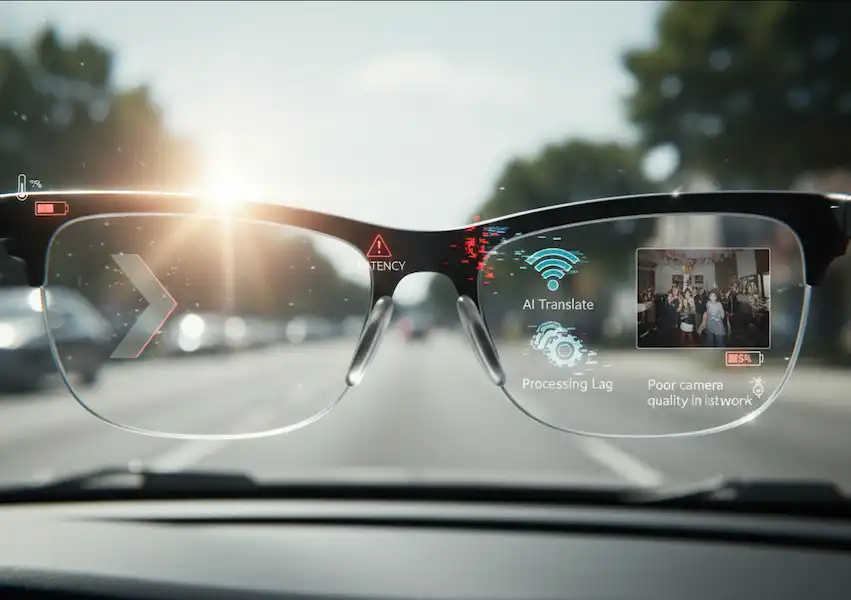
The frames are tiny. There is no room for a massive battery or a cooling fan. When you record 3K video, the processor generates a massive amount of heat right next to your temple. Most smart glasses with cameras will “thermal throttle” (shut down or reduce quality) after about 15–20 minutes of continuous recording. Experts at Lifehacker note that battery life is often the biggest hurdle, requiring frequent top-offs in the charging case.
Charging Habits
You aren’t going to plug these in like a phone. You’ll be using a charging case. My routine involves wearing them for 2-3 hours of casual use (music, notifications, a few 30-second clips) and then popping them in the case for 20 minutes while I grab lunch. If you try to film a whole wedding ceremony with these, you’re going to have a very expensive pair of regular glasses by the time the cake is cut.
Privacy: The “Creep Factor” in 2026
We have to talk about the LED. By law in most regions now, smart glasses with cameras must have a physical, hard-wired LED that shines when the camera is active.
Insider Tip: Some early “stealth” glasses tried to put the LED behind the glass or make it dim. Modern privacy advocates and companies like Meta and Google have made these lights much brighter to maintain trust and safety standards. If you try to cover the LED with tape or paint, many modern glasses use an ambient light sensor to detect the obstruction and will actually disable the camera.
In my experience, the “creepy” factor disappears once people realize you aren’t hiding it. I usually tell my friends, “Hey, I’m wearing my smart glasses, the light will turn on if I take a photo.” Transparency goes a long way.
Choosing Your Frames: A Quick Comparison
| Feature | Meta Ray-Ban (Gen 2/3) | Android XR Frames (Samsung/Google) | XREAL / AR Focus |
| Best For | Social Media & Style | AI Productivity & Maps | Gaming & Movies |
| Camera Quality | 12MP (Great in daylight) | 16MP (Optimized for AI) | 8MP (Functional only) |
| OS Synergy | Best on iPhone | Best on Android | Neutral (Tethered) |
| Battery Life | ~4 hours mixed use | ~5 hours mixed use | Varies (often wired) |
How to Get the Most Out of Your Investment
After a year of wearing these daily, here are my “pro tips” for making smart glasses with cameras actually useful:
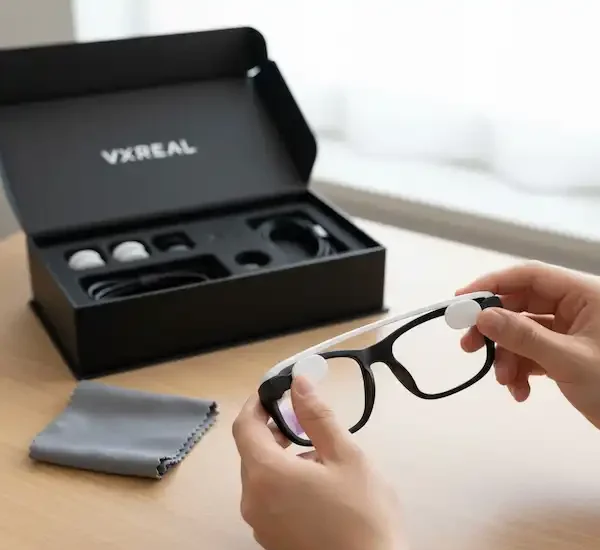
- Clean the Lenses Constantly: Your fingers will naturally hit the camera lens when you adjust your glasses. A smudged lens on a smart glass looks ten times worse than a smudge on a phone because of the way light hits the small sensor.
- Use Voice Commands: Tapping your temple looks a bit “Secret Service.” Using voice commands like “Hey Meta, take a video” or “Hey Google, record this” feels much more natural when you’re on the move.
- Mind the Storage: Most glasses have 32GB to 64GB of internal storage. If you’re shooting 3K video, that fills up fast. Set your app to “Auto-Delete after Sync” so you never run out of space during a trip.
Frequently Asked Questions
Can I get prescription lenses in smart glasses with cameras?
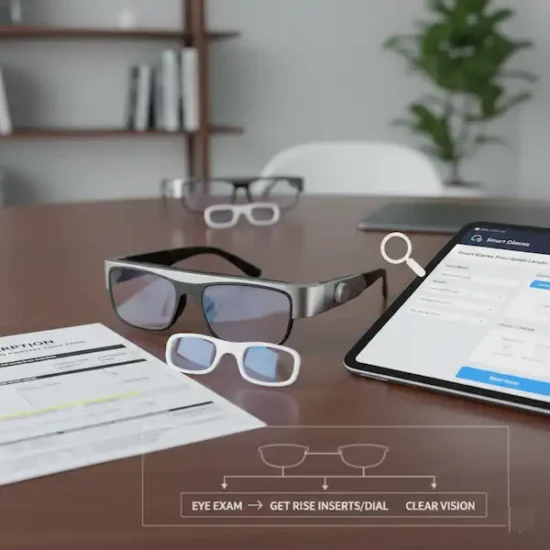
Yes. Almost every major brand now partners with companies like Lensabl or has their own optical program. I wear a -2.50 prescription in mine, and the extra weight of the tech doesn’t actually make them slide down my nose as much as you’d think.
Do they work in the rain?
Most are IPX4 rated, which means “splash resistant.” Some rugged models like the Oakley Meta Vanguard can handle light sleet or snow, but you should never take them in the pool. I lost a pair of $300 frames to a rogue wave at the beach last summer.
Are people going to be mad I’m recording them?
In 2026, the social etiquette has shifted. However, legal experts at the American Bar Association warn that “all-party consent” laws still apply in many states. If you’re in a private setting, just ask. Most people are more curious about the tech than they are worried about the recording.
Will they replace my smartphone?
Not yet. Think of smart glasses with cameras as a “satellite” for your phone. They handle the quick captures and the “right now” information, but you’ll still want your phone for long-form typing, professional photography, and heavy app usage.
Additional Helpful Information
- Read more about how to capture photos and videos with smart glasses – How to Capture Photos and Videos with Smart Glasses?
- Information about the Solos vs Meta Ray-Ban smart glasses – Solos AirGo V2 vs Meta Ray-Ban: Which AI Frames Actually Fit Your Life?